
Australian Peace Council Meeting Advances Dialogue, Diversity, and Ethical Leadership
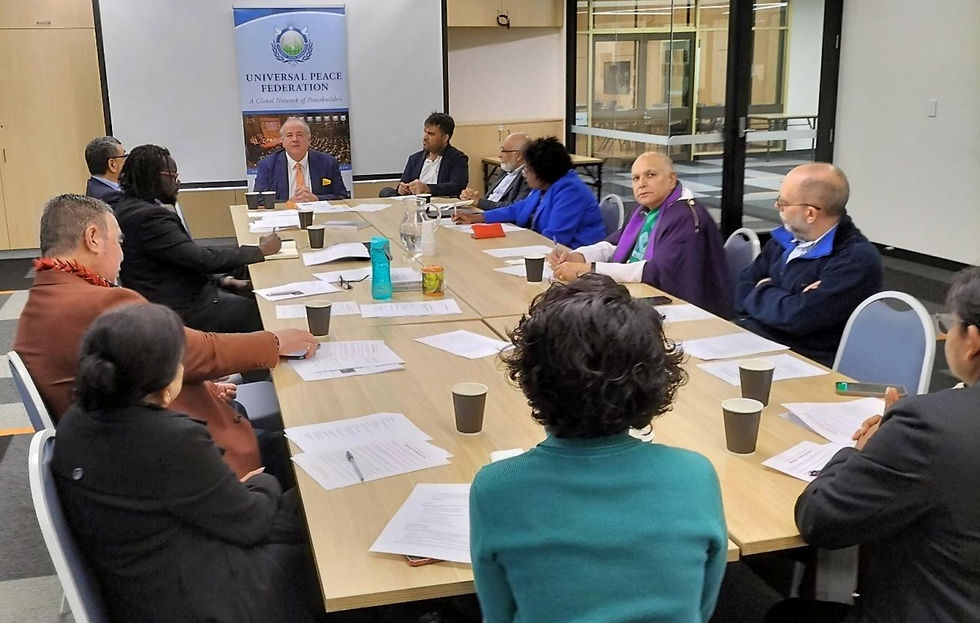
The Universal Peace Federation (UPF) Australia convened an Australian Peace Council Meeting bringing together a former Member of Parliament, former diplomats, peacebuilders, community leaders, and scholars to mark the United Nations International Day of Cultural Diversity for Dialogue and Development.
The meeting focused on the vital role of dialogue, diversity, and ethical leadership in addressing today’s complex social and global challenges. Participants explored how inclusive engagement across cultural, ideological, and institutional boundaries can strengthen cooperation and build sustainable peace.
A highlight of the program was the keynote address by Victor Perton, Founder of the Centre for Optimism and former Member of the Victorian Parliament. Speaking on the theme “Optimism, Leadership, and Dialogue in a Fractured World,” Mr Perton emphasised the importance of values-based leadership grounded in practical optimism. He noted that meaningful dialogue, beyond symbolic exchange is essential for bridging divisions and fostering trust in increasingly polarised societies.
Central to the meeting was the introduction and discussion of the Peace Council Charter. The Charter outlines a principled, inclusive, and intellectually diverse framework for peacebuilding, guided by a commitment to the welfare, dignity, and peaceful coexistence of all people. Participants engaged in open dialogue to review its mission, functions, and governance structure, contributing insights and recommendations to refine the document.
The Peace Council was presented as a unique advisory and co-design body under the auspices of UPF Australia. Distinctively, it seeks to integrate ethical and spiritual perspectives alongside policy and community-based approaches. Its purpose is to promote good practices in peacebuilding and to support collaborative efforts across local, national, and global levels, including engagement with the United Nations and civil society.
Participants also contributed to identifying shared moral and ethical principles, as well as proposing practical initiatives such as peace education programs, youth leadership development, interfaith cooperation, and community-based solutions to local challenges. The emphasis on intergenerational co-leadership and mentorship highlighted the importance of empowering young people as active agents of peace.
The meeting concluded with a commitment to ongoing collaboration, including further development and endorsement of the Charter and the establishment of priority initiatives. Future Peace Council meetings are planned to align with key United Nations observances, continuing to build momentum for dialogue-driven and values-based peacebuilding across Australia.
Through this gathering, UPF Australia reaffirmed its commitment to fostering unity, cooperation, and shared responsibility in the pursuit of a more peaceful and inclusive society.


Comments